
TL;DR
Codeine cough syrup is an opioid medicine. "Purple drank" is the recreational mix of it with soda and candy, taken in far larger amounts than a doctor would ever prescribe.
The sweet taste hides the dose. People often cannot tell how much opioid they have swallowed.
Alcohol, benzodiazepines, gabapentin, and other opioids all slow breathing. Combined with codeine, they can stop it.
Regular use leads to dependence. Stopping suddenly can cause withdrawal, and medical detox makes it safer.
If someone cannot be woken or is breathing slowly, call 911. For treatment help, call SAMHSA at 1-800-662-HELP (4357).
Table of Contents
What is "purple drank"? How recreational use differs from medical use
Codeine and alcohol: why combining depressants can be deadly
Dangerous combinations: benzodiazepines, gabapentin, other opioids, and more
Detox and treatment options: getting safe help at Laguna View Detox
Introduction
A bottle of cough syrup sits in a bathroom cabinet. Most people see a cold remedy. A teenager who has seen it in a song lyric or a social media post may see something else. That gap in perception is where the danger is.
Codeine cough syrup is a legitimate medicine when a prescriber directs its use. It is also an opioid, and like any other opioid it can be misused, mixed with other substances, and overdosed on. This article explains how the medical version differs from "purple drank," why the soda and candy make it more dangerous, which combinations are most likely to cause harm, and what safe treatment looks like. If you are worried about yourself or someone you love, you will find a plain answer here, and a way to get help.
What is codeine cough syrup and how is it meant to be used?
Codeine is an opioid. In cough syrup, it is usually paired with another ingredient such as promethazine, an antihistamine that causes drowsiness. In the United States, codeine products are controlled substances, and the DEA Diversion Control Division maintains the schedules that classify them and the rules for prescribing and dispensing.[1]
Used as directed, codeine cough syrup is measured in small doses, for a short time, for a specific cough. A prescriber knows your other medicines and your health history. That oversight is part of what makes it safe.
Your body processes codeine into morphine. The effect is a quieter cough, along with drowsiness, slowed breathing, and in some people a calm or euphoric feeling. The same effect that eases a cough becomes risky at higher amounts.

What is "purple drank"? How recreational use differs from medical use
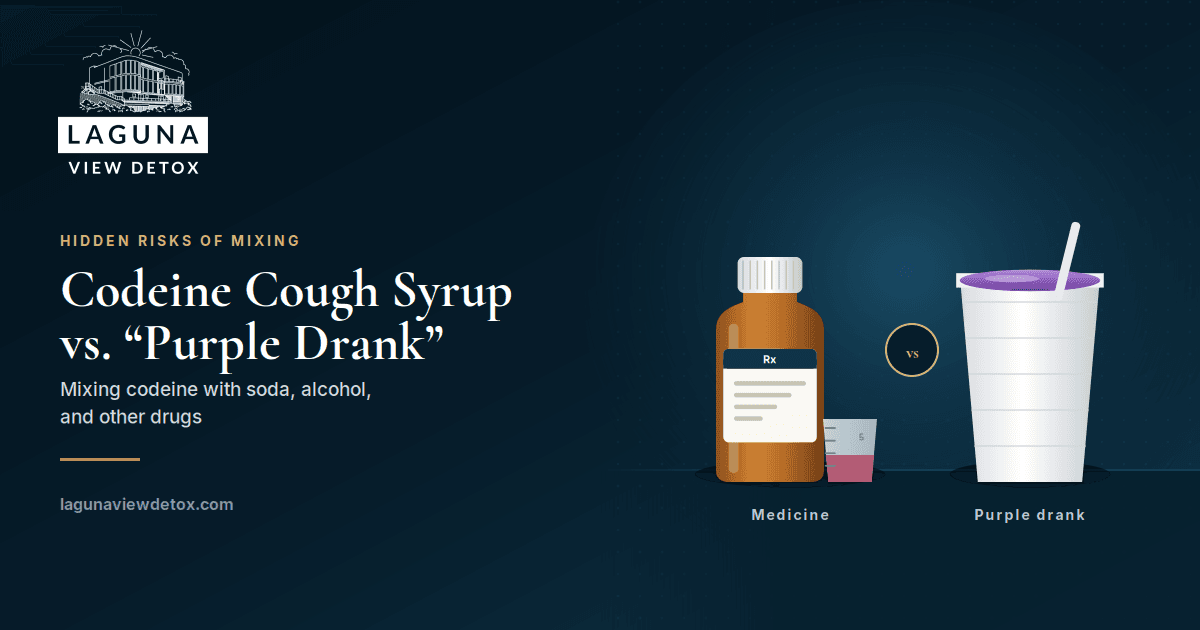
"Purple drank" is a street name for codeine and promethazine cough syrup mixed with soda, often with hard candy. It goes by other names too, including "lean" and "sizzurp." The purple color comes from the syrup itself.
The difference from medical use is not the ingredient. It is the amount, the reason, and the lack of supervision.
Factor | Medical use | Purple drank |
|---|---|---|
Amount | Small, measured dose | Often many times a typical dose, poured by eye |
Purpose | Control a cough | Feel sedated or high |
Oversight | Prescriber and pharmacist | None |
Mixed with | Nothing, or water | Soda, candy, often alcohol or other drugs |
Source | Pharmacy | Often diverted or unknown |
The DEA warns about diversion, meaning controlled medicines that leave legitimate channels, and about illegitimate online sellers.[1] Syrup bought outside a pharmacy may not contain what the label claims.

Why mixing codeine with soda and candy hides the danger
Sugar and fizz make codeine cough syrup taste like a treat. That is a problem, because taste is one of the few warnings a person has. Medicine that tastes bitter or medicinal feels like something to measure. A cold, sweet drink feels like something to finish.
The mix has other effects too:
No dose you can count. A large cup of soda with syrup poured in has no marked amount, so no one knows how much opioid is in it.
Sipping over hours. People keep drinking while the first effects are still building, then the total catches up.
Looks harmless. A cup of purple soda does not look like a drug to a parent, a teacher, or a friend, so trouble goes unnoticed.
Shared cups. When a drink is passed around, nobody knows who took how much.
NIDA has a Parents and Educators section among its topics because families often need help recognizing substances they have not seen before.[2]

Codeine and alcohol: why combining depressants can be deadly
Both codeine and alcohol are central nervous system depressants. They slow the brain's signals to the body, including the signal that tells you to breathe. Taken together, their effects add up and can be stronger than either alone.
NIAAA publishes information on alcohol's effects on the body, and it is worth reading if you drink regularly.[3] The practical risk is simple. A person who has had a few drinks and then takes codeine cough syrup may fall asleep and stop breathing enough to be in danger, without any dramatic warning beforehand.
Alcohol also impairs judgment. Someone who is drinking is more likely to keep adding syrup, and less likely to notice they are in trouble. Vomiting while heavily sedated adds another risk, because a person who cannot protect their airway can choke.
If you drink daily and also use codeine, stopping either one abruptly can be dangerous. Our post on warning signs that alcohol withdrawal needs medical supervision covers that side in detail.

Dangerous combinations: benzodiazepines, gabapentin, other opioids, and more
Alcohol is not the only substance that raises the stakes. Anything that slows breathing or causes sedation can combine with codeine cough syrup in the same way.
Combined with codeine | What it adds |
|---|---|
Benzodiazepines (such as Xanax or Valium) | Added sedation and slowed breathing |
Gabapentin | Drowsiness and slowed breathing, especially at high amounts |
Other opioids (prescription pills, heroin) | Stacked opioid effect on breathing |
Promethazine (already in many syrups) | Extra sedation on top of codeine |
Sleep aids and muscle relaxants | Deeper sedation, harder to wake |
Counterfeit pills | May contain fentanyl, with no way to tell by looking |
Counterfeit pills deserve their own mention. NIDA lists fentanyl among its featured topics, and illicit pills made to look like prescription medicine can contain it.[2] For more, read what fentanyl is and the overdose symptoms to know.
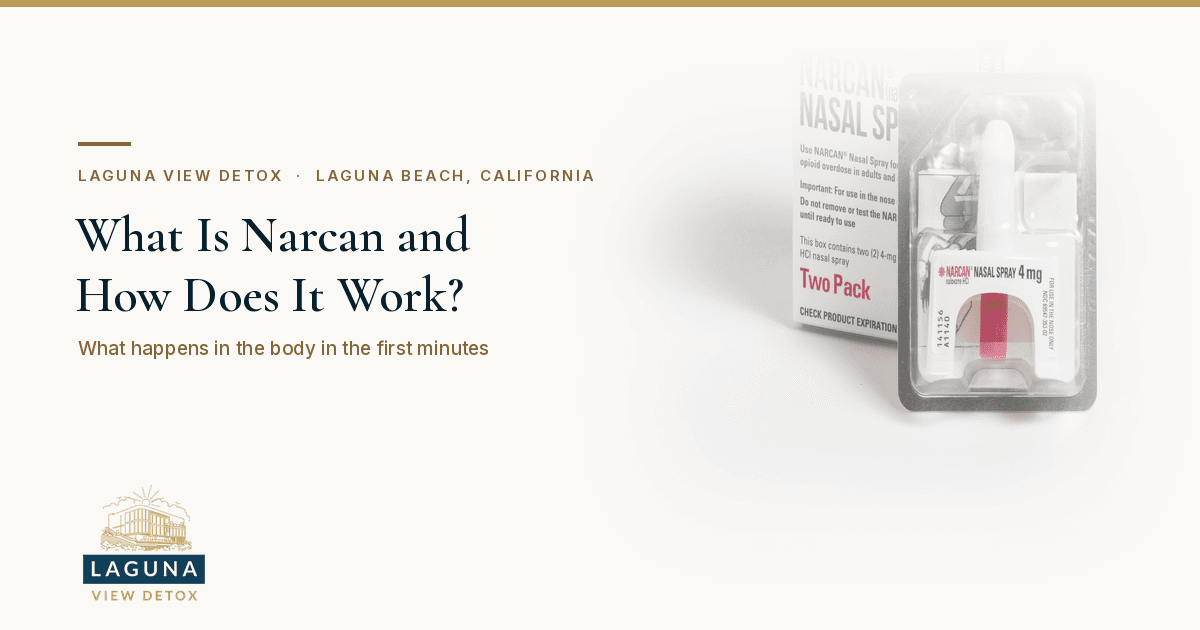
If an opioid overdose is suspected, naloxone can reverse it. We explain how in what Narcan does in the first minutes. You must still call 911 afterward.

Warning signs of codeine misuse, dependence, and overdose
The signs fall into three stages. They can overlap, and you do not need to see all of them.
Misuse
Empty cough syrup bottles with no illness to explain them
Large amounts of soda, candy, or foam cups kept out of sight
Drowsiness, slurred speech, or a dreamy, slowed manner
Dependence
Needing more syrup to get the same effect
Nausea, sweating, restlessness, muscle aches, or trouble sleeping when a dose is missed
Spending money and time to get more, and failing to cut back
Overdose
Very slow or shallow breathing, or long pauses between breaths
Cannot be woken, or barely responds
Blue or gray lips and fingertips, pinpoint pupils
Gurgling or choking sounds
An overdose is an emergency. Call 911, give naloxone if you have it, and stay with the person. Do not wait for them to "sleep it off."
Detox and treatment options: getting safe help at Laguna View Detox
Regular use of codeine cough syrup can cause physical dependence. Stopping suddenly may bring opioid withdrawal, which is miserable and can push people back to using just to feel normal. It is more complicated when alcohol or benzodiazepines are involved, because withdrawal from those can be dangerous in its own right.
At Laguna View Detox, medical detox means clinicians monitor you through withdrawal, treat symptoms, and watch for complications. For some people, medications for opioid use disorder are part of the plan. NIDA describes these medications as safe, effective, and life-saving.[2] ASAM, the medical society for addiction physicians, publishes the ASAM Criteria, guidelines used to match a person to the right level of care.[4]
Detox is the first step, not the whole treatment. After it, many people continue with residential inpatient care and addiction therapies. If anxiety, depression, or trauma is part of why someone started, dual diagnosis treatment addresses both together. Aftercare and alumni support continues once you go home. If you are weighing options, our guide on how to choose a detox center may help, and so may a look at a typical day in our program.
You can also search for programs at FindTreatment.gov or call the SAMHSA National Helpline.[5]
Frequently Asked Questions
Q: Is codeine cough syrup the same thing as purple drank?
A: Not exactly. Codeine cough syrup is a medicine meant for short, measured use. Purple drank is the recreational mix of that syrup, usually with promethazine, soda, and candy, taken in much larger and unmeasured amounts.
Q: Why is it dangerous to mix codeine cough syrup with alcohol?
A: Both slow the central nervous system, including breathing. Together their effects add up, so a person can become too sedated to wake or to breathe safely. Alcohol also clouds judgment, which makes it easier to take too much.
Q: Can you overdose on codeine cough syrup, and what are the signs?
A: Yes. Signs include very slow or stopped breathing, being unable to wake, blue or gray lips, pinpoint pupils, and gurgling sounds. Call 911 right away and give naloxone if it is available.
Q: Is it safe to stop taking codeine cough syrup suddenly after regular use?
A: It is not advised without medical guidance. Sudden stopping can cause opioid withdrawal, and if alcohol or benzodiazepines are also involved, withdrawal can be dangerous. Talk to a doctor or a detox program first.
Q: How does medical detox help with codeine dependence, and what does treatment involve?
A: Medical detox provides monitoring, symptom relief, and, when appropriate, medication to ease withdrawal. Treatment then usually continues with therapy, residential care if needed, treatment for any co-occurring mental health condition, and aftercare planning.
Conclusion
Codeine cough syrup helps with a cough when used as directed. Poured into soda, mixed with alcohol, or stacked with benzodiazepines, gabapentin, or other opioids, it can slow a person's breathing until it stops. The sweet taste and the ordinary-looking cup make that easy to miss.
If you or someone you love is using codeine cough syrup this way, you do not have to wait for a crisis. Laguna View Detox can talk through your situation and explain what safe withdrawal looks like. Visit lagunaviewdetox.com to reach our team. In an emergency, call 911.
References
U.S. Drug Enforcement Administration, Diversion Control Division. (n.d.). DEA Diversion Control Division | Home. - https://www.deadiversion.usdoj.gov
National Institute on Drug Abuse. (n.d.). NIDA.NIH.GOV | National Institute on Drug Abuse (NIDA). - https://nida.nih.gov
National Institute on Alcohol Abuse and Alcoholism. (n.d.). National Institute on Alcohol Abuse and Alcoholism (NIAAA). - https://www.niaaa.nih.gov
American Society of Addiction Medicine. (n.d.). ASAM - American Society of Addiction Medicine. - https://www.asam.org
Substance Abuse and Mental Health Services Administration. (n.d.). Home | SAMHSA. - https://www.samhsa.gov